《一骑入幽篁》一骑入林 清影自生
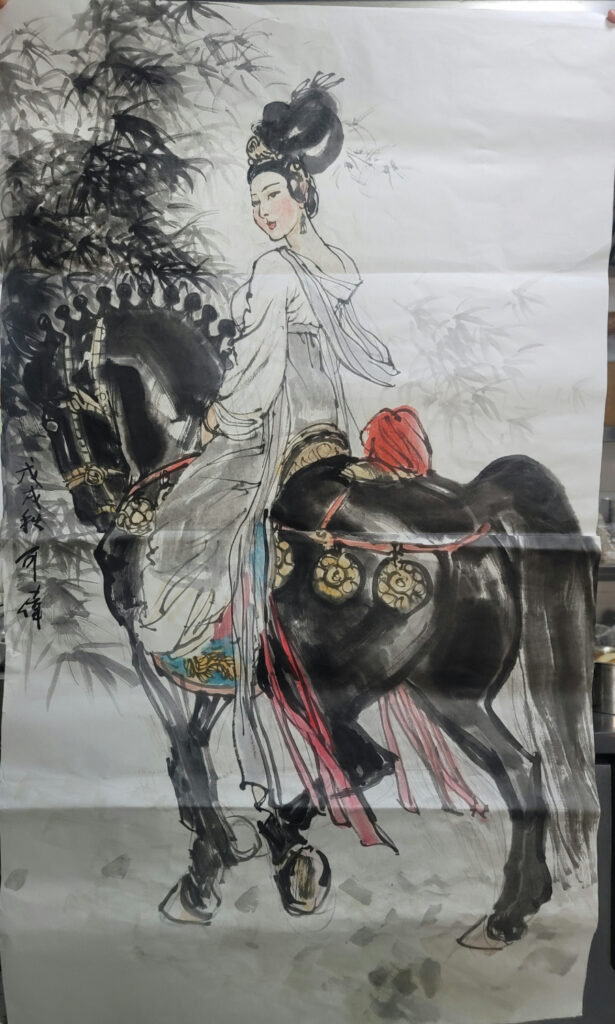
王可伟先生国画作品《一骑入幽篁》一骑入林,清影自生。2018年创作,画心尺寸:69cm×120cm,未装裱。
作品介绍
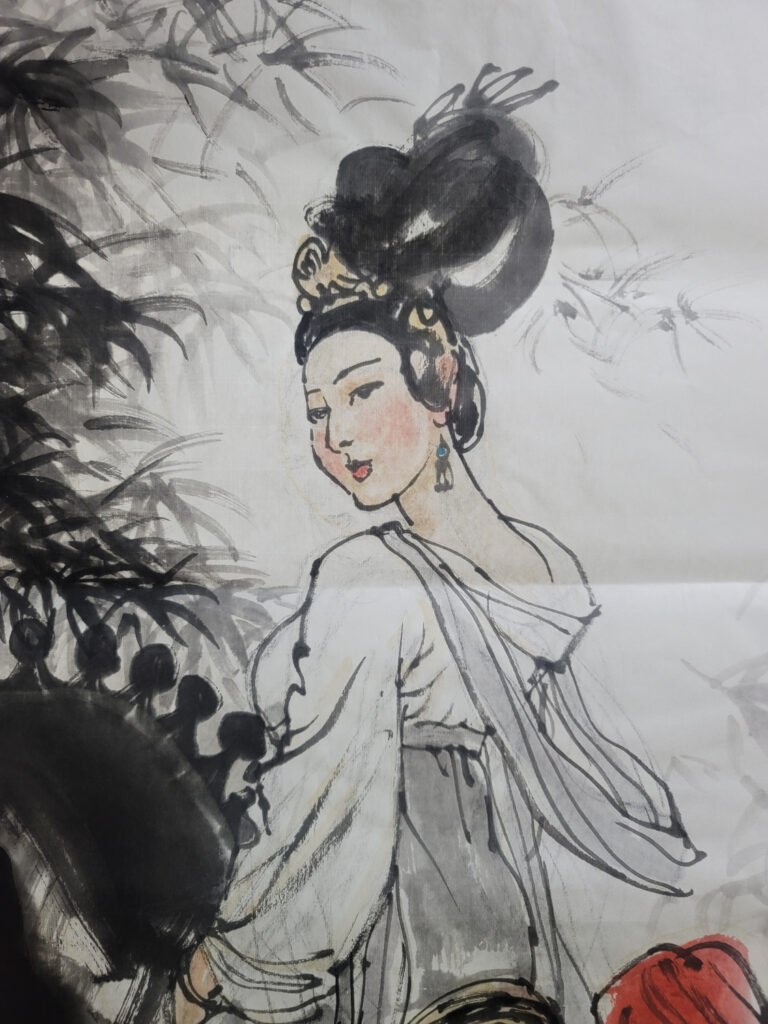
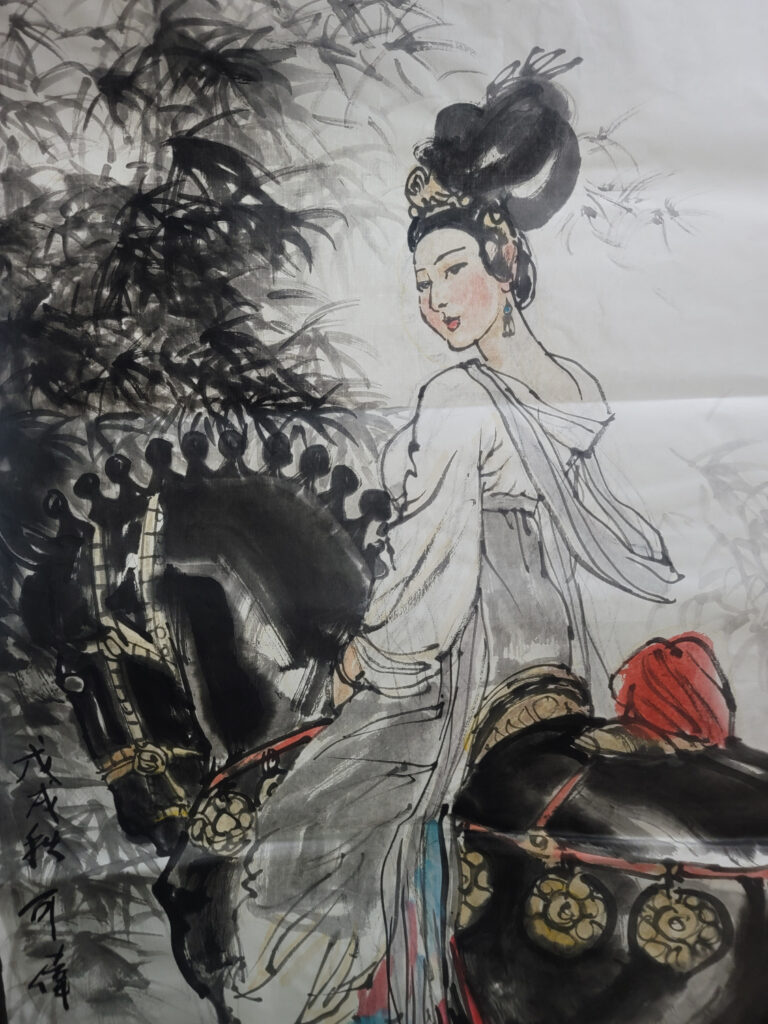
画面以一位古典仕女骑行于竹林之间为主题,人物回首含笑,神情温婉从容,仿佛在行旅之间与观者不期而遇。墨色淋漓的竹影与沉稳厚重的骏马形成鲜明对比,一动一静之间,营造出富有节奏感的视觉张力。
作品在表现手法上融合了写意与工写结合的语言:骏马以大笔浓墨铺陈,笔势雄浑有力,体现出力量与稳定;人物则以细腻线条勾勒,衣袂轻盈,线条流转间尽显东方女性的柔美与雅致。画面中点缀的红色缰绳与饰物,如同点睛之笔,在水墨的黑白层次中注入生机与温度,使整体气氛更加鲜活灵动。
竹林的处理虚实相生,浓淡交错,既构建出空间层次,又营造出幽静清雅的意境。整幅作品以简驭繁,在留白之间延展想象空间,使观者仿佛置身其境,感受一段穿行于自然与心境之间的诗意旅程。
作品不仅呈现出传统东方审美中“气韵生动”的精神内核,也通过人物与环境的呼应,表达出一种从容、自由而内敛的生命气息。
====================================================================
“A Rider Enters the Bamboo Grove” by Mr. Wang Kewei
“A single rider enters the woods, where tranquil shadows arise.”
Created in 2018
Painting size: 69 cm × 120 cm
The composition centers on a classical lady riding through a bamboo grove. She turns back with a gentle smile, her expression calm and graceful, as if encountering the viewer by chance along her journey. The richly inked bamboo shadows form a striking contrast with the solid, weighty presence of the horse. Through the interplay of stillness and motion, the painting creates a rhythmic visual tension.
In terms of technique, the work blends freehand expression with refined detailing. The horse is rendered with bold, sweeping strokes of dense ink, conveying strength and stability. In contrast, the figure is delicately outlined with fine lines; her flowing garments and graceful contours reveal the elegance and softness of an Eastern feminine ideal. Accents of red in the reins and ornaments serve as finishing touches, bringing vitality and warmth into the monochrome ink composition, and enlivening the overall atmosphere.
The bamboo grove is treated with a balance of presence and absence, where variations in ink tone and density create both spatial depth and a serene, refined mood. The artist achieves complexity through simplicity, using negative space to extend the viewer’s imagination. One feels almost transported into the scene, experiencing a poetic journey between nature and inner contemplation.
Beyond its formal beauty, the work embodies the traditional Eastern aesthetic principle of “spiritual resonance.” Through the harmony between figure and environment, it expresses a sense of composure, freedom, and quiet introspection.