《东渡》千帆历尽·初心不改
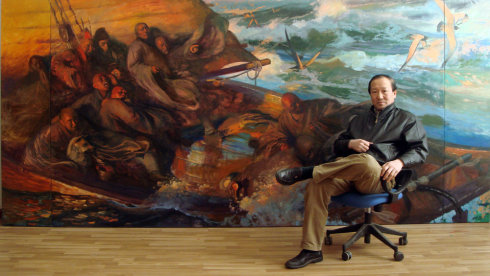
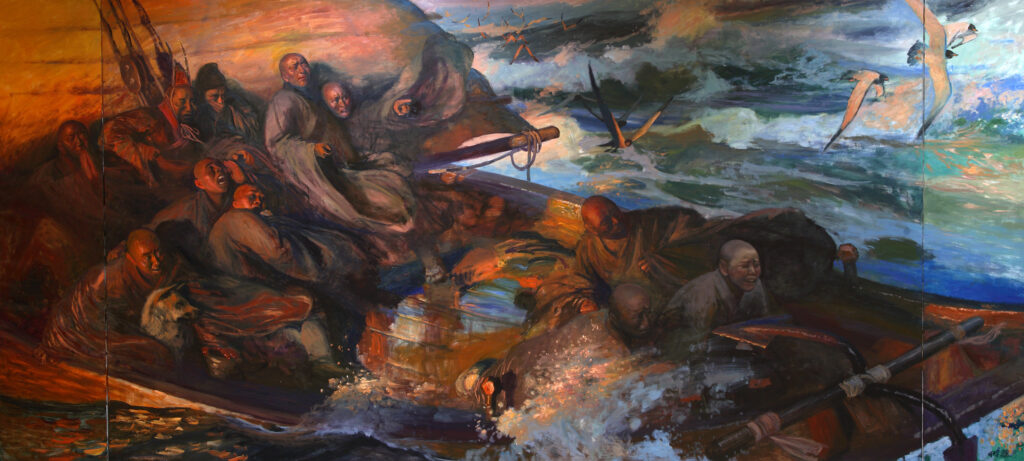
王可伟先生油画作品《东渡》创作于2008年,尺寸:230cm*180cm
作品介绍
千帆历尽·初心不改
唐天宝元年(742年),应日本僧人邀请,唐代高僧鉴真决意东渡日本,传播佛法与唐代文化。然而,这并不是一次普通的航海旅行。前后十一年间,鉴真率众六次启航,五次失败,历经风暴、漂流、饥饿与疾病,同行者中有三十六人死于途中,二百余人退出东渡行列。即便双目失明,鉴真仍矢志不渝,终于于753年成功抵达日本,完成了这一震撼东亚文明史的伟大壮举。
油画《东渡》正是以这段历史为题材创作。
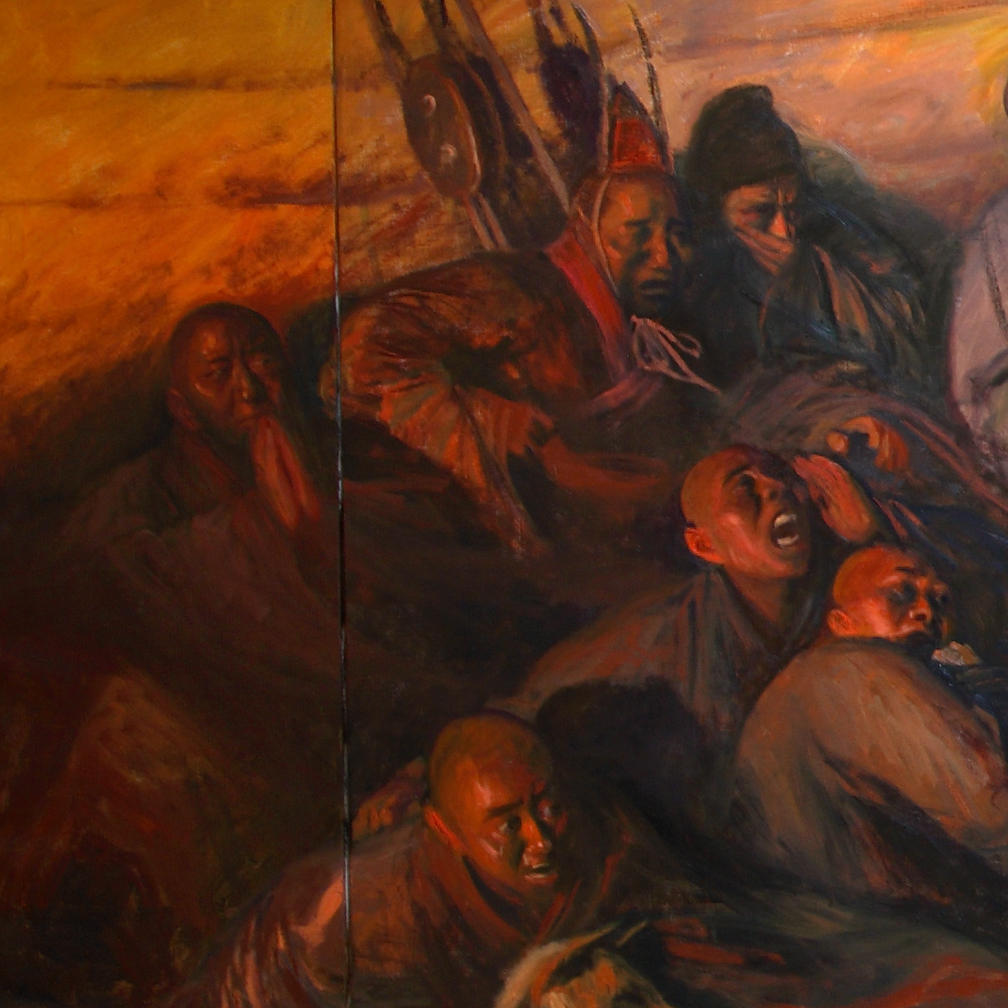
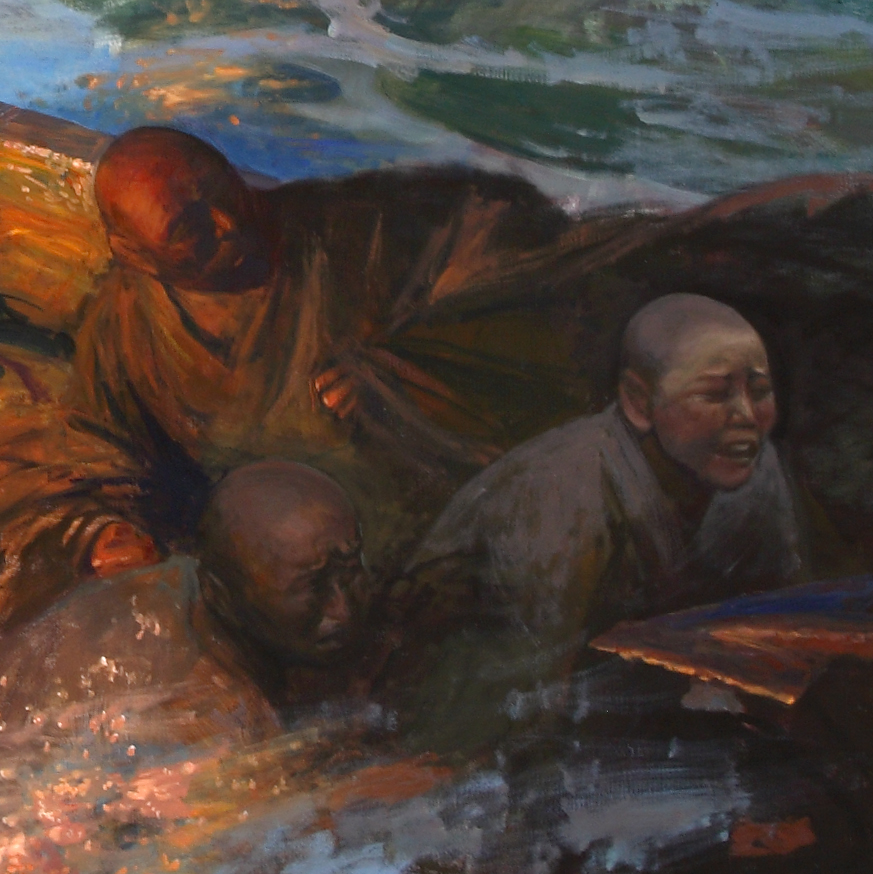
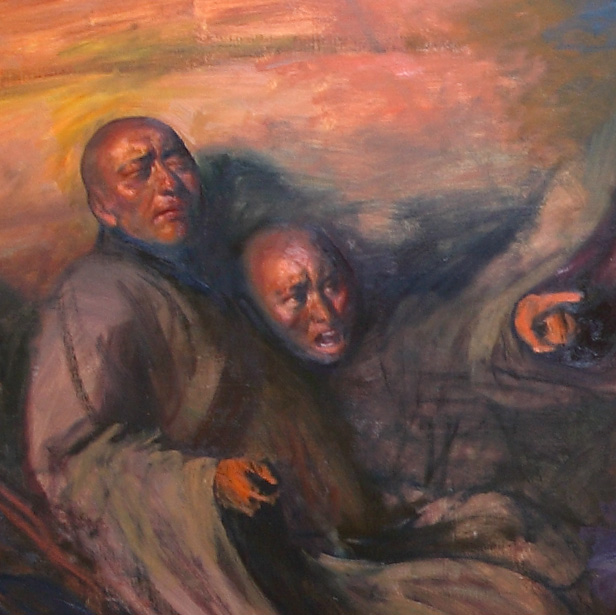
画面没有选择抵达日本时的欢庆场景,而是聚焦于东渡途中最惊心动魄的一刻:巨浪翻涌,海风呼啸,小船在波涛中颠簸前行。甲板上积满海水,僧人们衣衫尽湿,神情中既有疲惫与惊惧,也有对彼岸的期待。有人瞪大双眼,仿佛在询问:“真的到了吗?”有人伸手指向远方的扶桑大地。
而画面的中心人物——鉴真大师,则以一种超越苦难的平静姿态端坐船中。他饱经风霜的面容沉稳而坚定,表现出一位伟大精神导师非凡的气度、胸怀与抱负。正是这种坚定的信念,使他能够在无数次失败与绝境面前百折不挠,最终完成了东西文明交流史上的壮举。
在色彩处理上,作品以金色的晨曦与蔚蓝的海浪形成强烈对比。渐渐变浅的海水和盘旋的海鸥,暗示着彼岸已经临近,也象征着希望与新生。汹涌的海浪与温暖的光芒交织在一起,既表现了自然的严酷,也寓意着人类精神力量对苦难的超越。
《东渡》不仅是对鉴真大师个人精神的礼赞,更是对坚守信念、勇于奉献和文明交流精神的颂扬。鉴真东渡的故事跨越千年,至今仍是中日文化交流史上最令人敬仰的篇章之一。
====================================================================
Mr. Wang Kewei’s Oil Painting Eastward Voyage
Created in 2008
Dimensions: 230 × 180 cm
A Thousand Sails Endure, Yet the Original Aspiration Remains Unchanged
In the first year of the Tianbao era of the Tang Dynasty (742 AD), at the invitation of Japanese monks, the eminent monk Jianzhen resolved to sail eastward to Japan to spread Buddhism and the culture of the Tang Dynasty. However, this was far from an ordinary voyage. Over the course of eleven years, Jianzhen attempted the journey six times and failed five times, enduring storms, drifting at sea, hunger, and disease. Thirty-six of his companions perished during the expeditions, and more than two hundred others withdrew from the mission. Even after losing his eyesight, Jianzhen never wavered in his determination. In 753 AD, he finally arrived in Japan, accomplishing one of the most extraordinary cultural missions in the history of East Asia.
The oil painting Eastward Voyage was created based on this historical event.
Rather than depicting the joyous moment of arrival in Japan, the painting focuses on one of the most dramatic moments during the voyage itself. Towering waves surge around a small vessel struggling through the stormy sea. The deck is drenched, and the monks’ robes are soaked through. Their expressions reveal both exhaustion and fear, yet also an unwavering anticipation of reaching the distant shore. One gazes ahead with wide-open eyes, as if asking, “Have we truly arrived?” Another points toward the land of Fusang in the distance.
At the center of the composition sits Master Jianzhen. Calm and composed amid the chaos, his weathered face radiates serenity and determination. His presence embodies the extraordinary spirit, vision, and aspiration of a great spiritual teacher. It was precisely this unshakable faith that enabled him to persevere through repeated failures and desperate circumstances, ultimately completing a monumental chapter in the history of cultural exchange between civilizations.
In terms of color, the painting juxtaposes the golden light of dawn with the deep blue of the sea, creating a striking visual contrast. The gradually shallower waters and the circling seagulls suggest that the long-awaited shore is finally near, symbolizing hope and rebirth. The interplay between turbulent waves and warm sunlight expresses both the harshness of nature and the triumph of the human spirit over adversity.
Eastward Voyage is not only a tribute to Master Jianzhen himself, but also a celebration of steadfast faith, selfless dedication, and the enduring spirit of cultural exchange. More than a thousand years later, Jianzhen’s journey remains one of the most revered chapters in the history of Sino-Japanese relations.
-1024x591.jpg)