《大唐皇帝会见外国使臣》
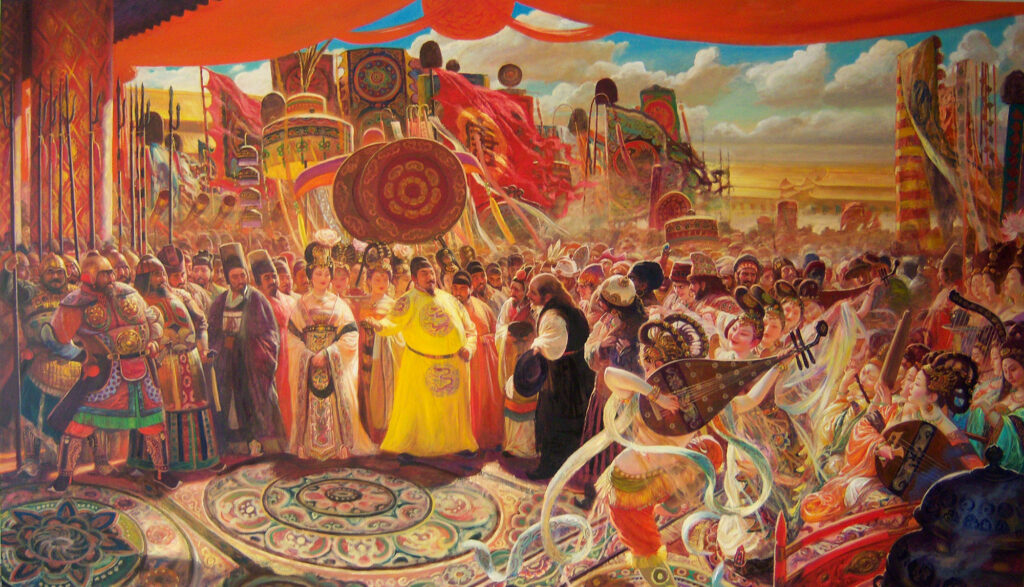
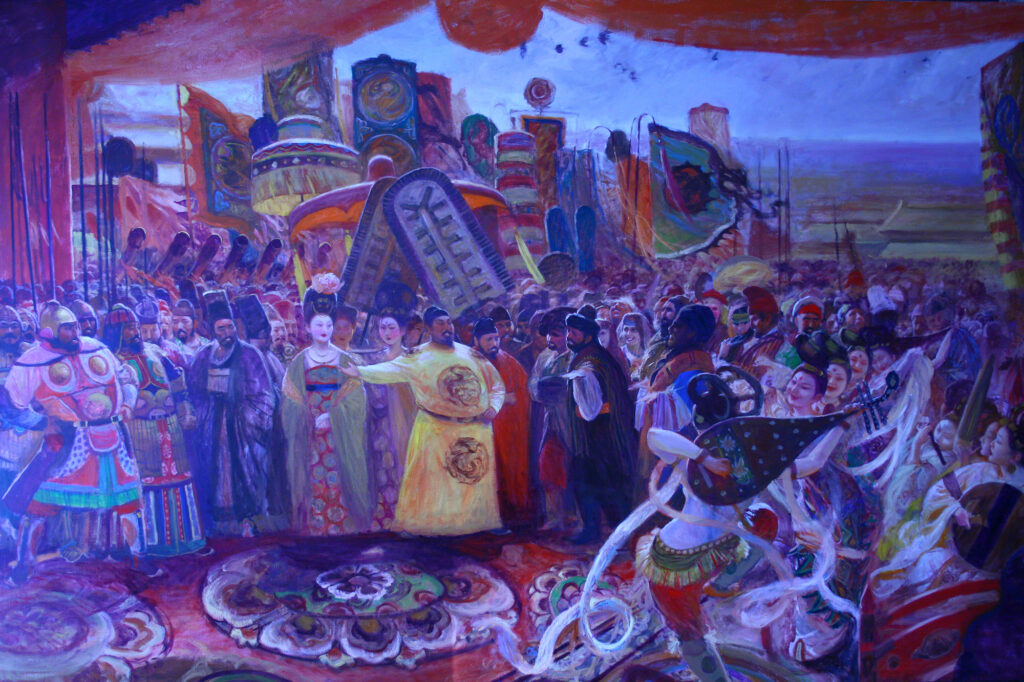
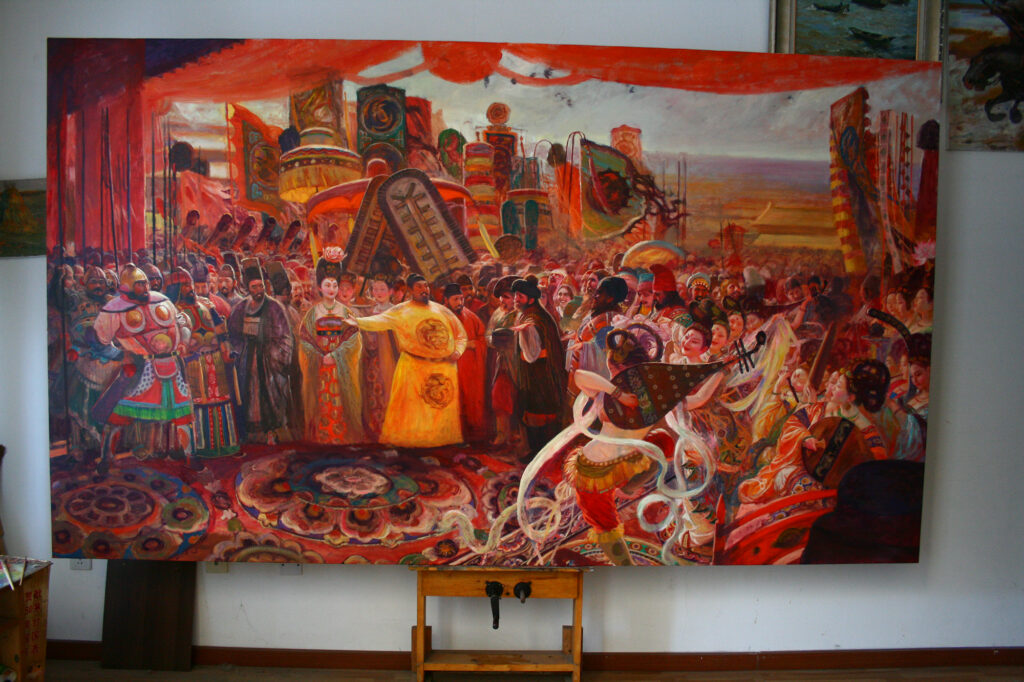
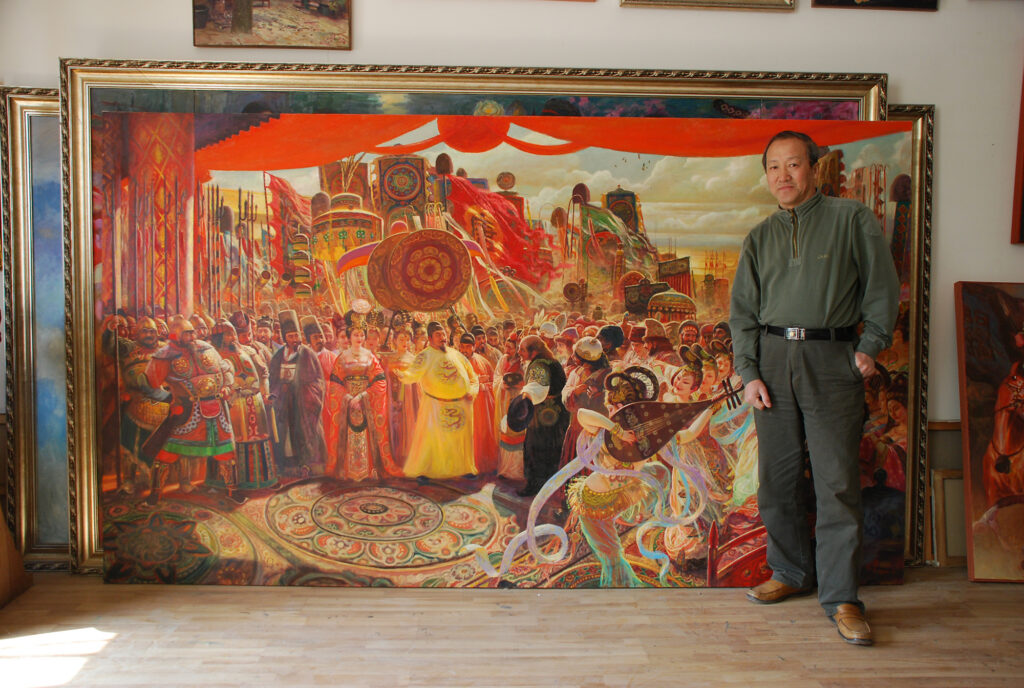
王可伟先生油画作品《大唐皇帝会见外国使臣》2011年创作,尺寸:310cm×180cm。
作品介绍
万邦来朝·盛世长歌
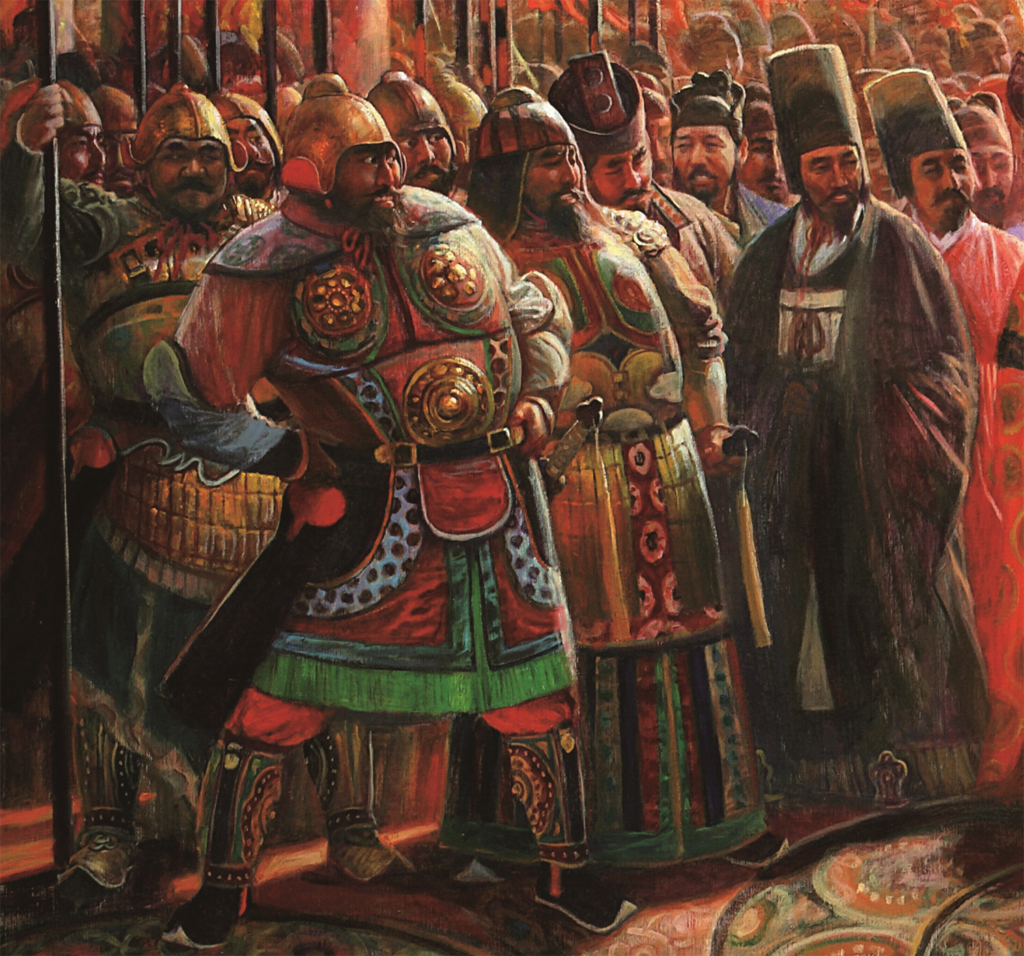
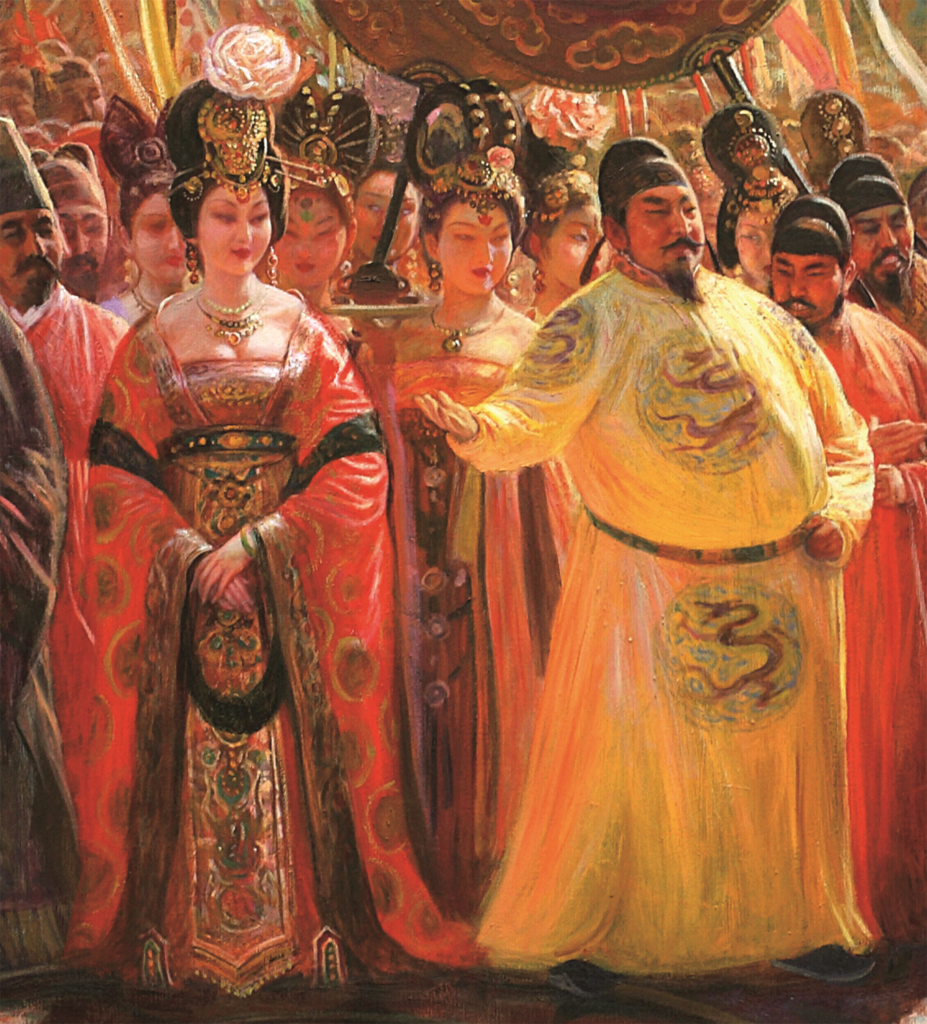
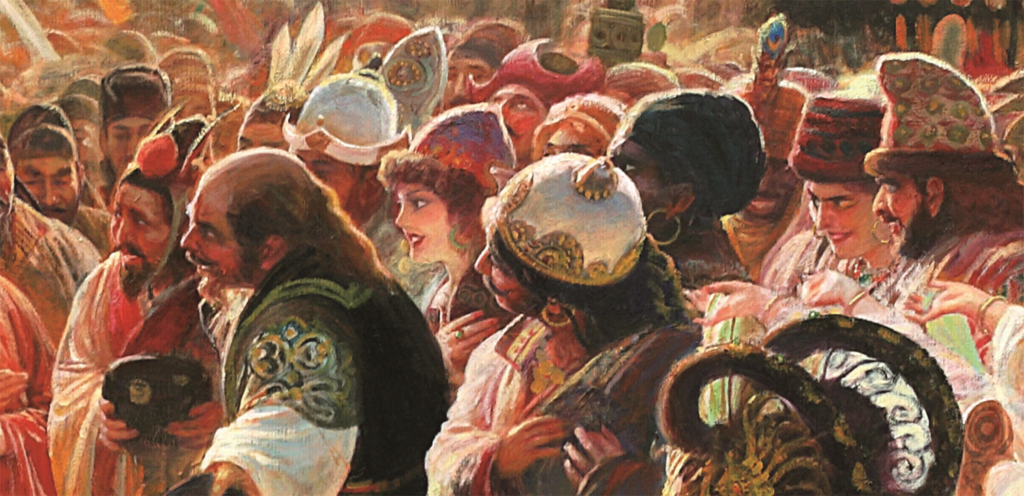
这幅《大唐皇帝会见外国使臣》以恢弘而华丽的场景,再现了盛唐时期万邦来朝的宏大气象。画面中,大唐皇帝居于人群中央,在庄严仪仗与群臣簇拥之下,会见来自不同地域的外国使臣。四周人物衣饰各异,既有中原服饰,也融合西域、中亚等异域风格,体现出当时频繁而开放的国际交流。
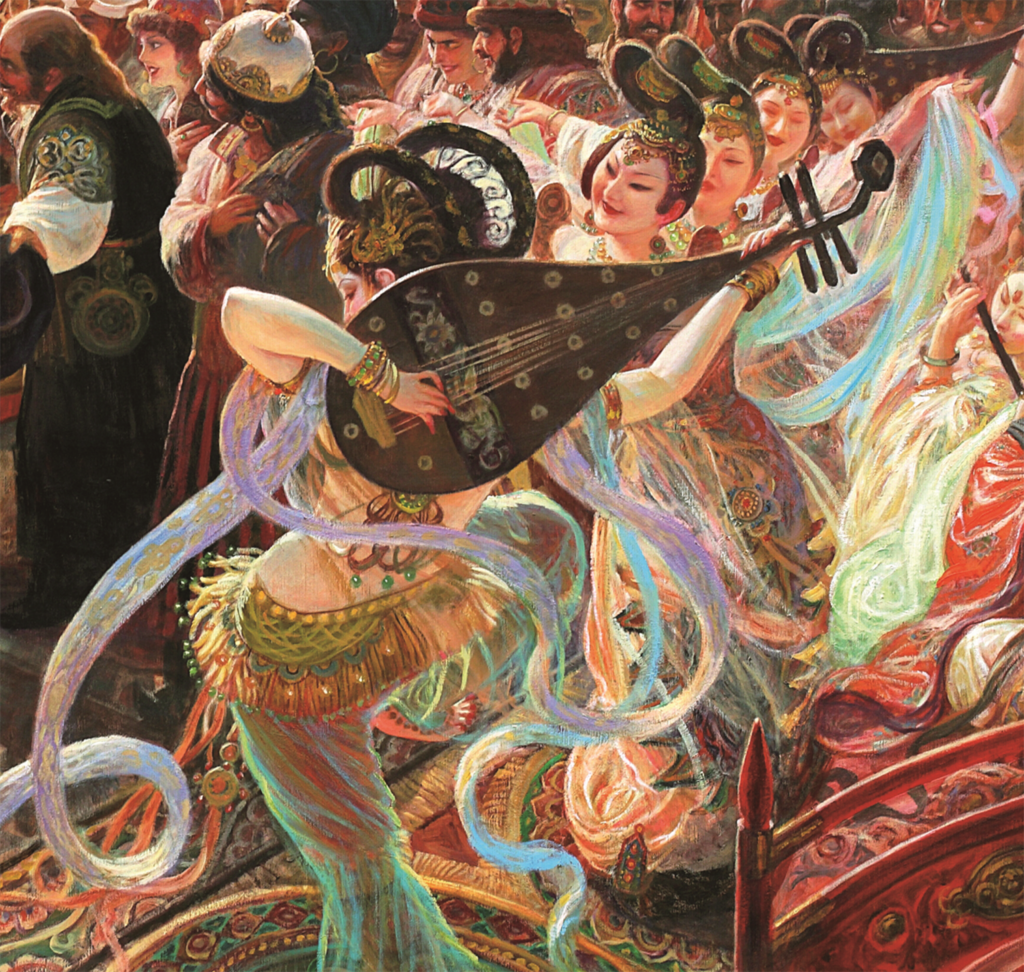
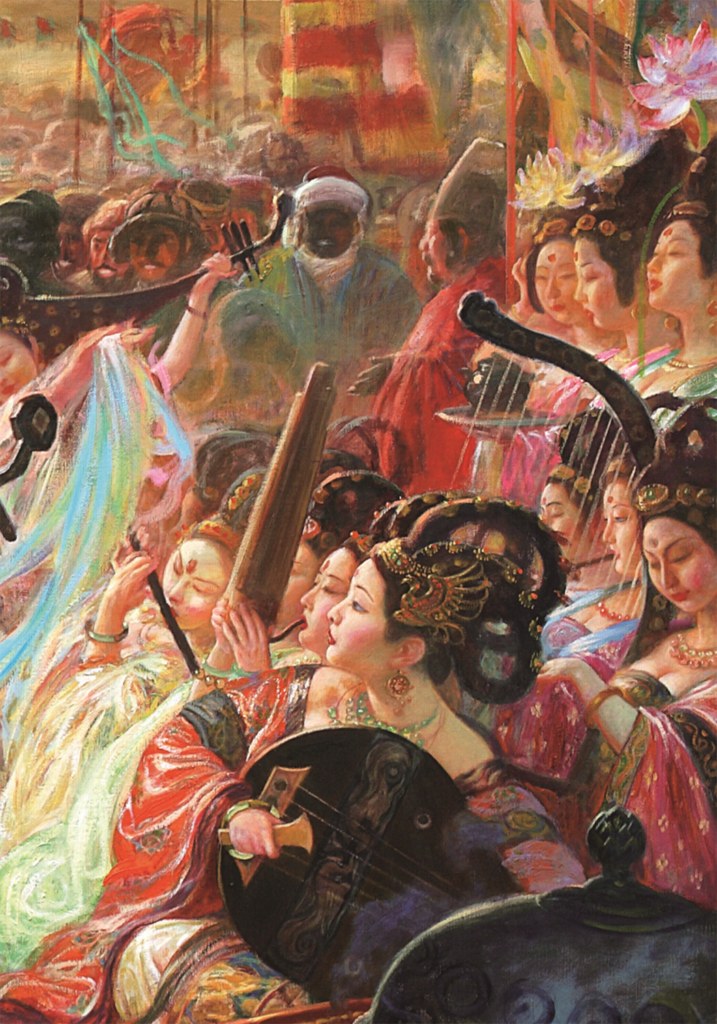
整幅作品充满盛唐特有的自信与包容。画家并未单纯停留于历史场面的描绘,而是通过繁盛的人群、飘扬的旗帜、绚丽的色彩与舞乐场景,共同营造出一种文明鼎盛时期的精神气象。画面中既有朝堂礼仪的庄重,也有丝绸之路文化交汇的热烈与繁华,使“大唐盛世”不仅停留在历史概念之中,而成为一种可以被直观感受到的视觉氛围。
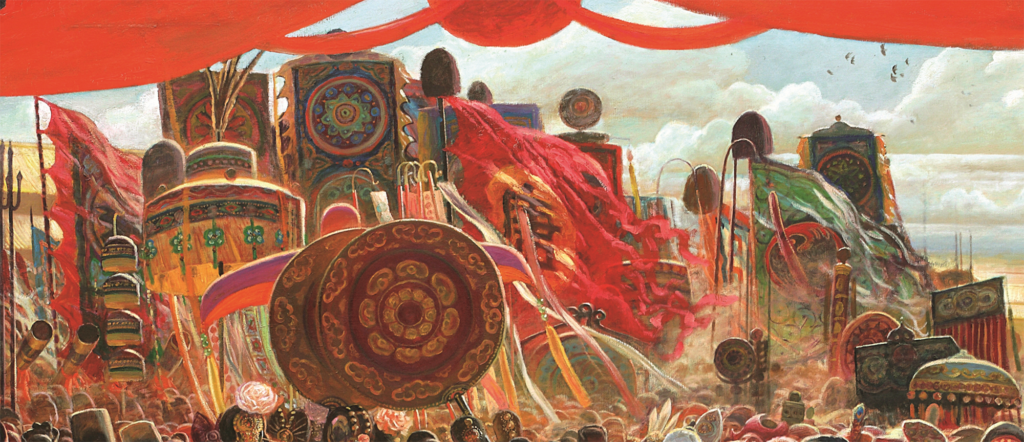
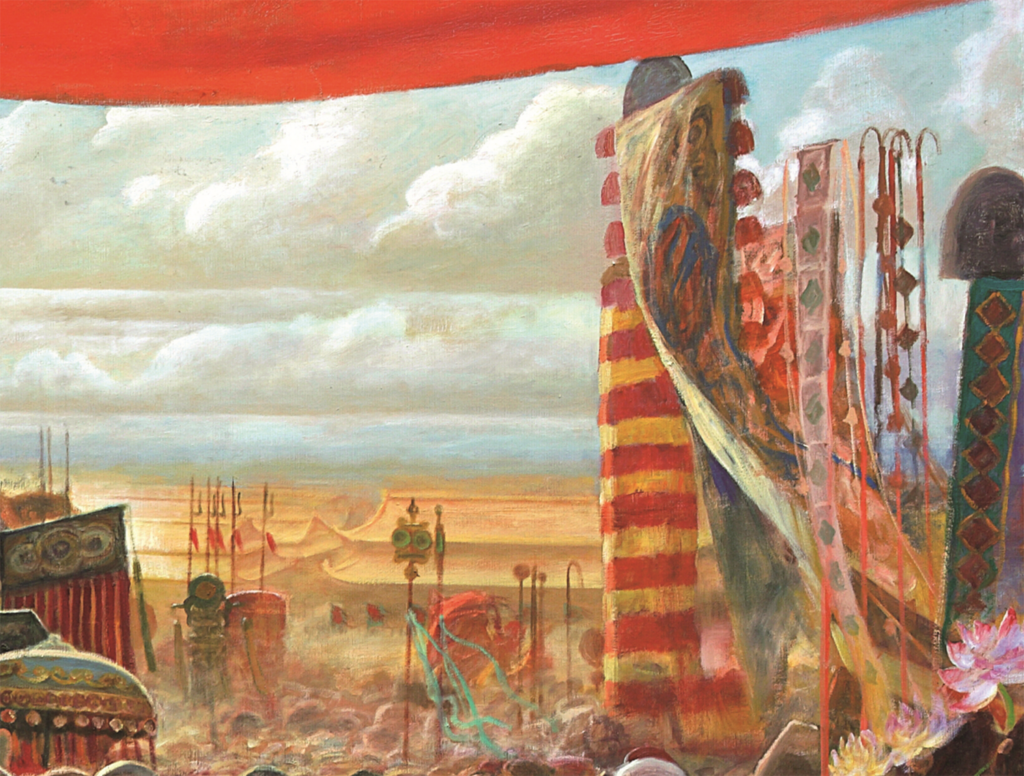
在绘画语言上,作品采用浓郁而富有层次的油画色彩,以金黄、朱红、碧绿等高饱和色调构建出辉煌灿烂的整体基调。人物众多却层次清晰,通过疏密变化与光线组织,使观者视线自然汇聚于核心人物。前景舞伎衣带翻飞,增强了画面的流动感与节奏感;远景旗帜、建筑与人群则不断延伸,形成宏阔而开放的空间气势。
本作品不仅展现了唐代经济繁荣、政治开明、文化发达与对外交流频繁的历史景象,更通过艺术化的想象与重构,表现出中华文明在盛世时期所具有的开放胸怀与文化自信。整体画面兼具历史史诗感与舞台般的视觉张力,具有鲜明的东方古典气韵与浪漫主义色彩。
====================================================================
Wang Kewei’s oil painting “The Tang Emperor Receiving Foreign Envoys” was created in 2011.
Size: 310 cm × 180 cm.
Introduction
All Nations Gather · A Prosperous Dynasty’s Song
This painting recreates the magnificent atmosphere of the High Tang Dynasty through a grand and splendid composition. At the center of the scene, the Tang emperor stands surrounded by court officials and ceremonial guards, receiving foreign envoys from distant lands. The diverse costumes throughout the painting combine traditional Central Plains attire with styles influenced by the Western Regions and Central Asia, reflecting the openness and active international exchanges of the Tang era.
The entire work radiates the confidence and inclusiveness unique to the Tang Dynasty. Rather than merely depicting a historical event, the artist uses flourishing crowds, flying banners, brilliant colors, music, and dance to create the spiritual atmosphere of a civilization at its peak. The scene carries both the solemnity of imperial ceremony and the lively prosperity brought by Silk Road cultural exchange, transforming the idea of the “Golden Age of Tang” into a vivid visual experience.
In terms of technique, the work employs rich and layered oil-painting colors. Dominant tones of gold, crimson, and emerald green build a radiant and magnificent visual harmony. Although the composition contains numerous figures, the structure remains clear and organized through careful control of density, light, and spatial arrangement, naturally guiding the viewer’s attention toward the central figures. The flowing ribbons of the dancers in the foreground add rhythm and movement, while the distant banners, architecture, and crowds extend the space outward, creating a vast and open atmosphere.
Beyond presenting the prosperity, political openness, cultural advancement, and international exchange of the Tang Dynasty, the painting also expresses the cultural confidence and broad-minded spirit of Chinese civilization during its golden age through artistic imagination and reinterpretation. The work combines epic historical grandeur with theatrical visual tension, embodying both classical Eastern elegance and romantic artistic expression.