《莱特湾大海战》怒海烽烟·铁舰悲歌
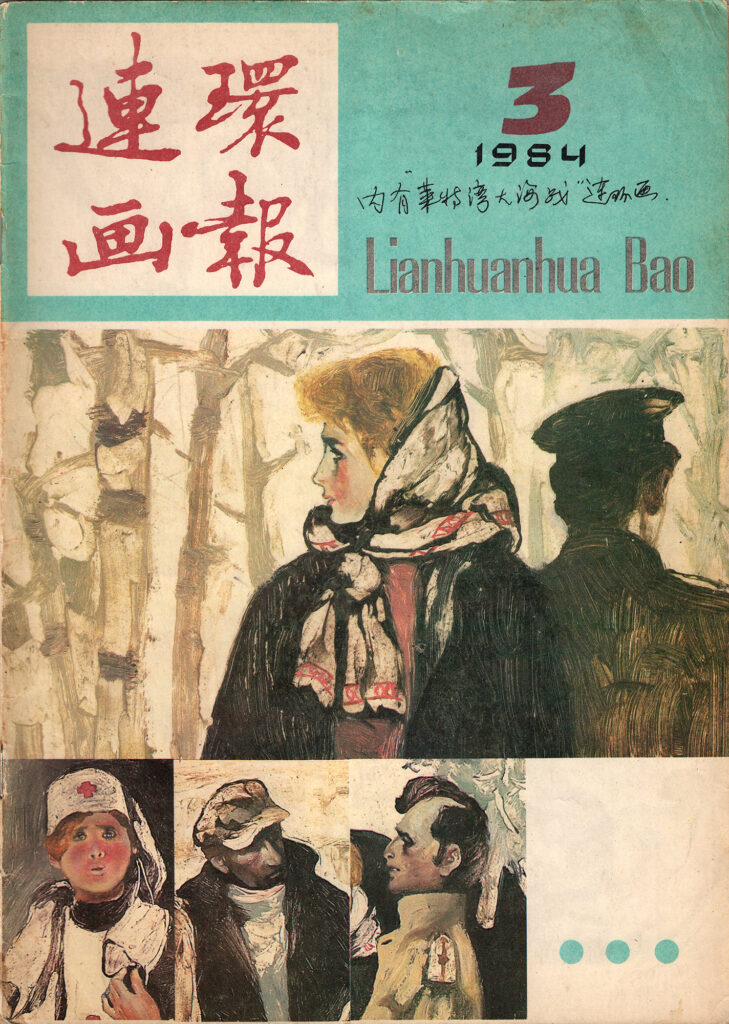
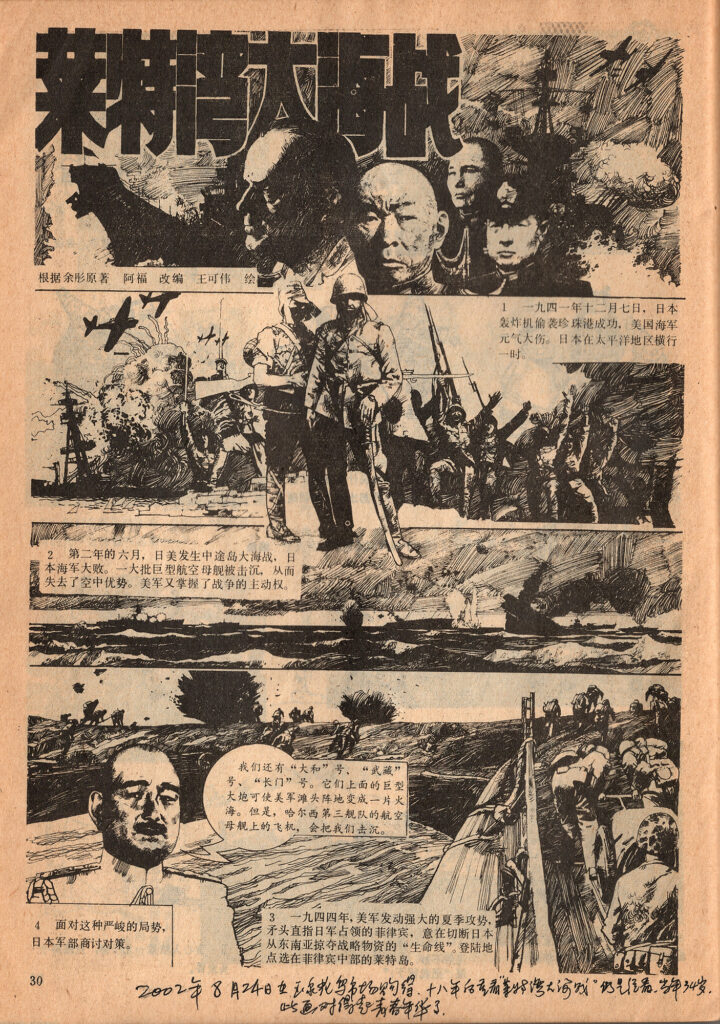
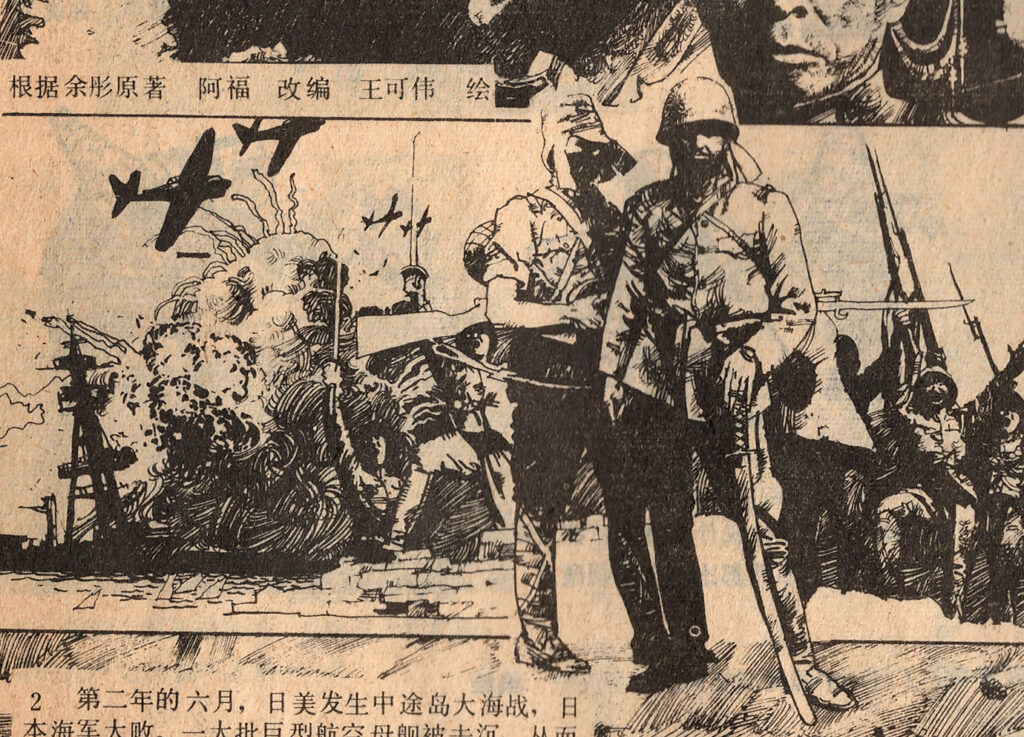
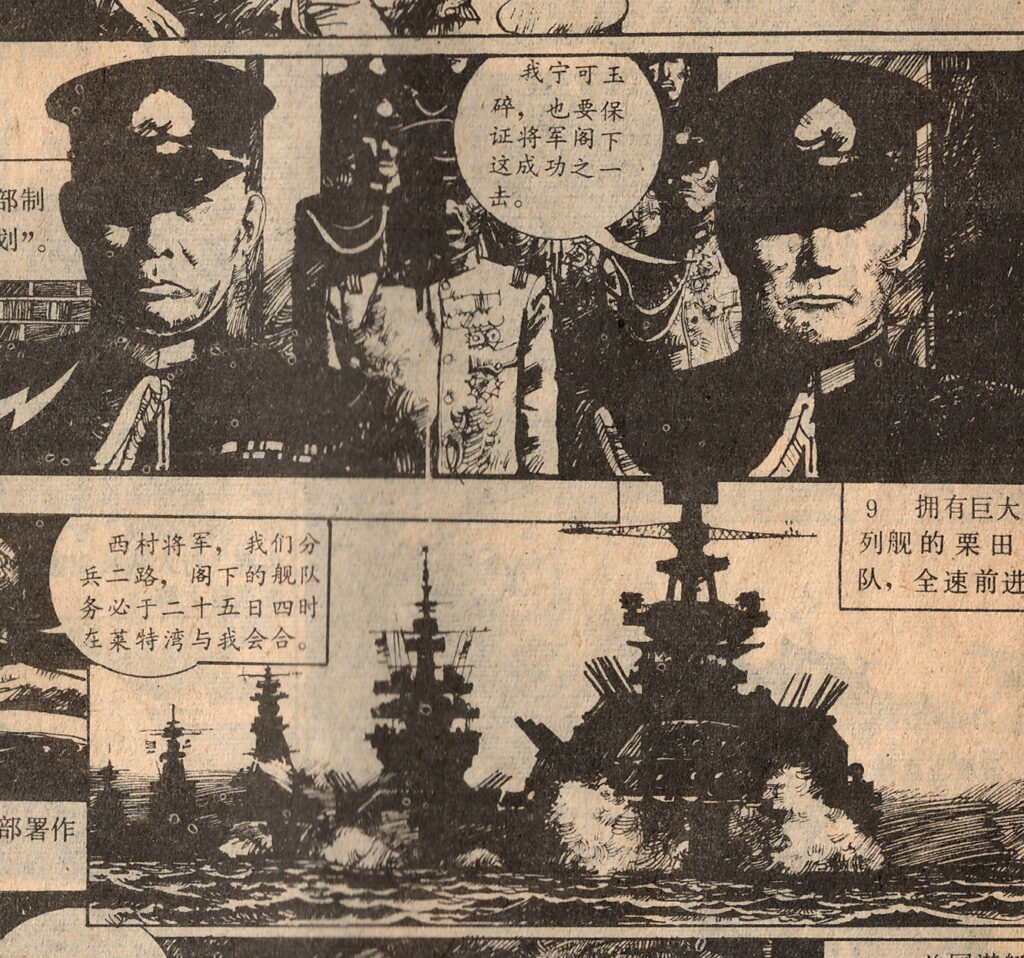
王可伟先生连环画作品《莱特湾大海战》1984年创作,发表在《连环画报》3月刊中。
作品介绍
怒海烽烟·铁舰悲歌
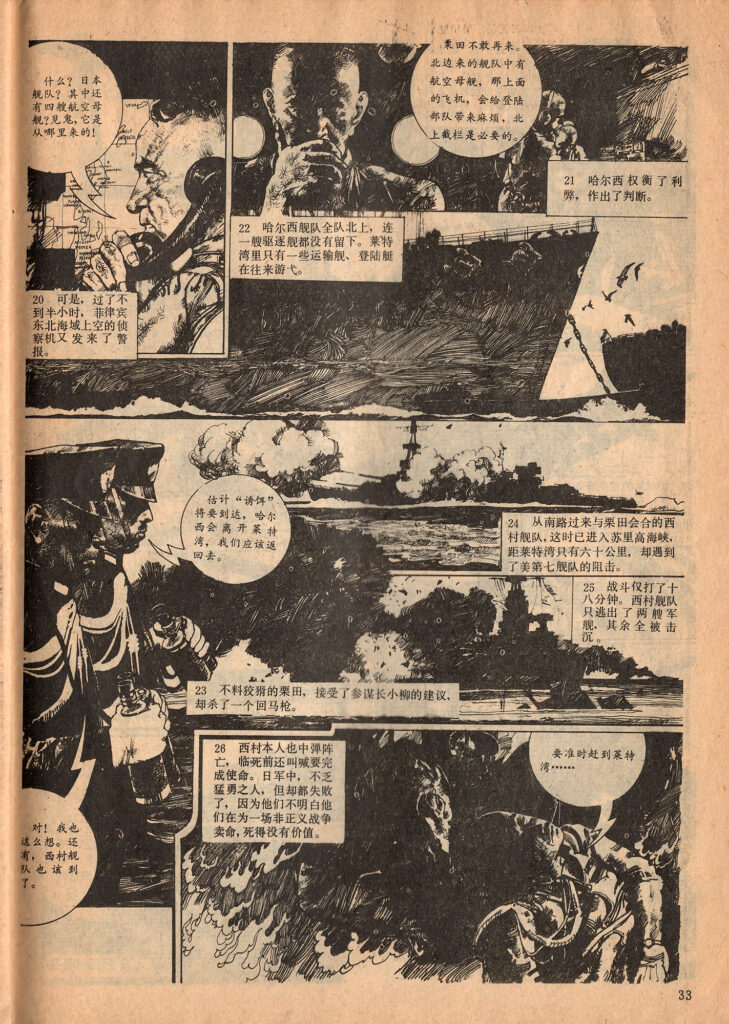
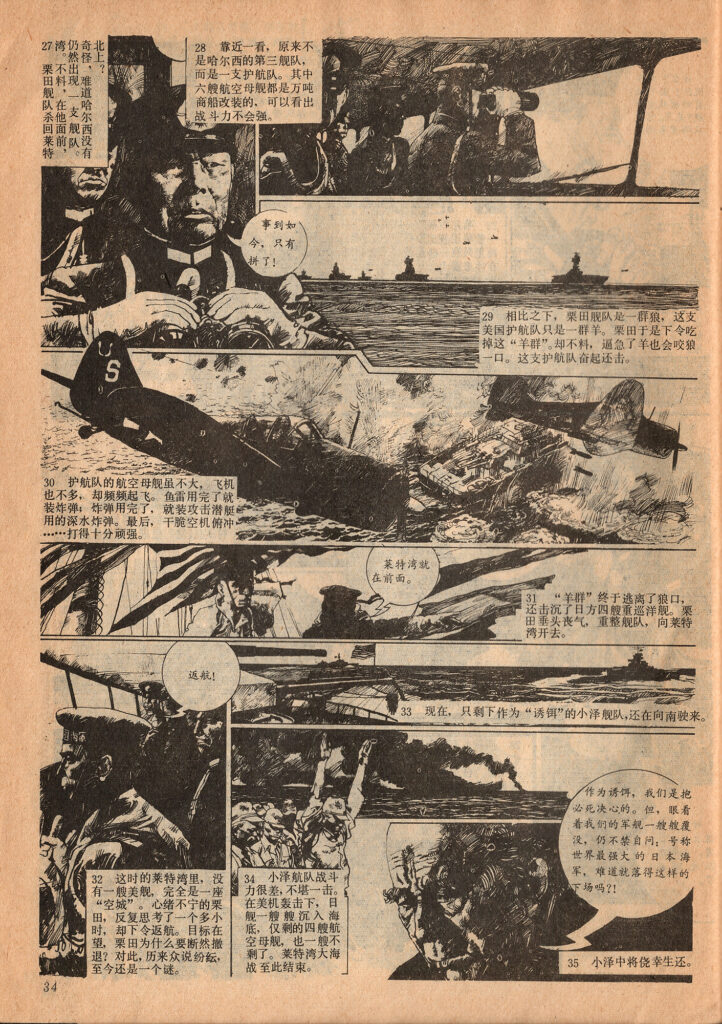
莱特湾海战(Battle of Leyte Gulf)是第二次世界大战中最大规模的海战之一,发生于1944年10月,地点在菲律宾附近海域。讲的是日本海军为了阻止美军登陆菲律宾,发动的一场“最后大决战”。当时美军准备夺回菲律宾,因为菲律宾对日本非常重要,是资源运输线关键位置。失去后,日本本土会越来越孤立。于是日本决定“拼命也要阻止美军登陆”结果日本海军遭到毁灭性打击,从此基本失去大规模海战能力。
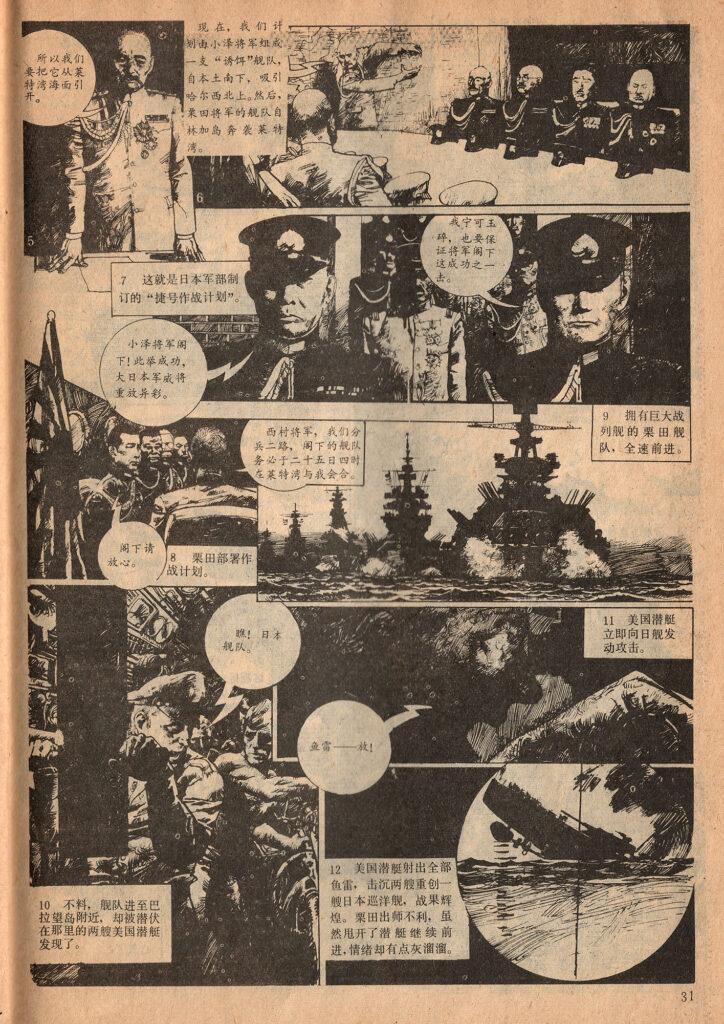
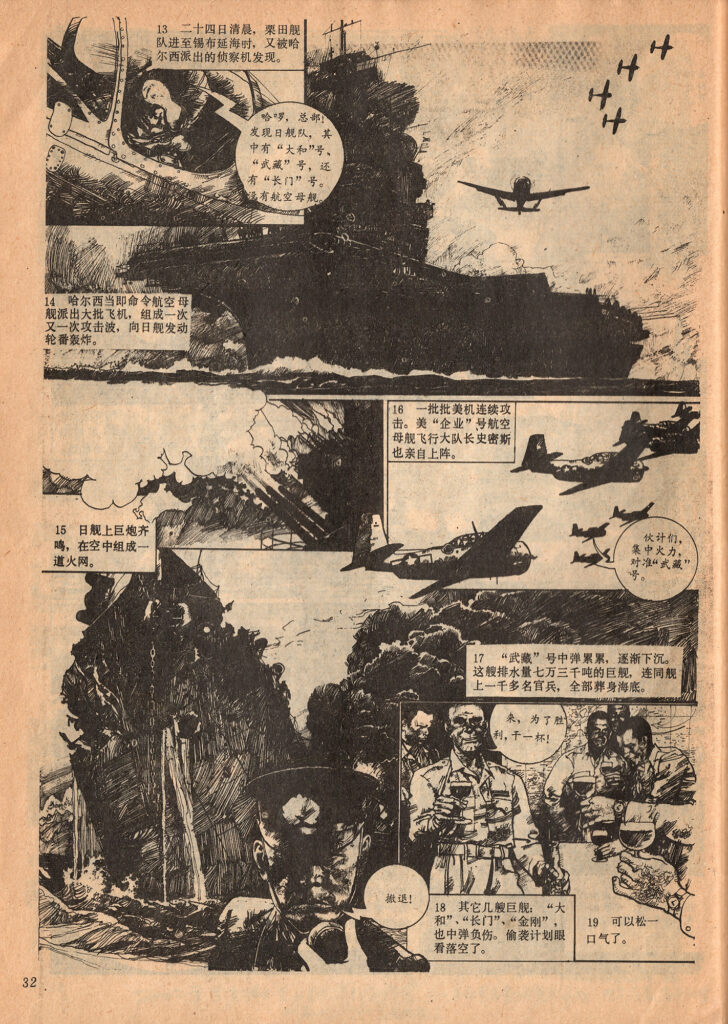
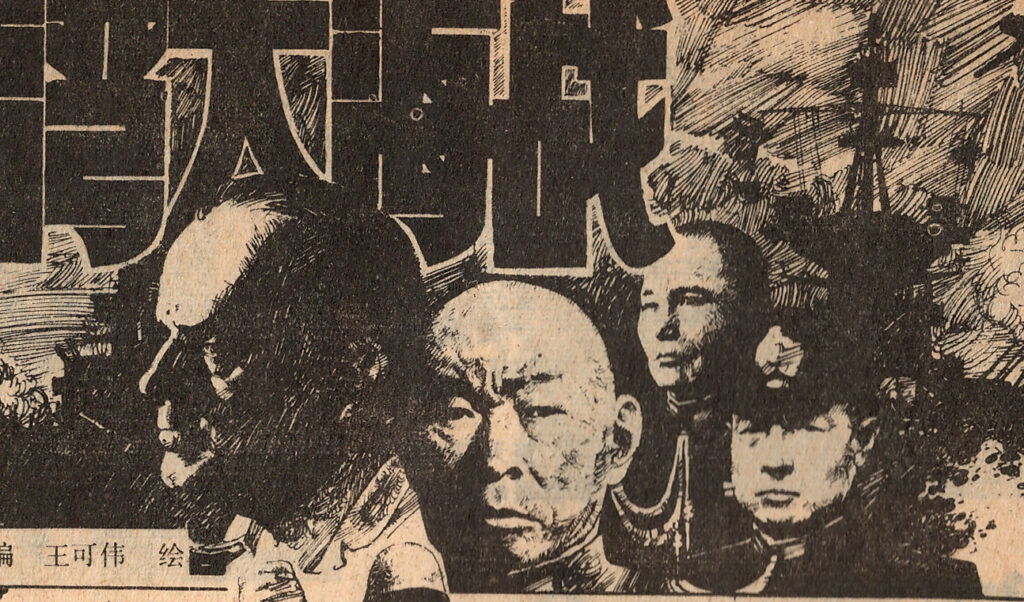
这幅连环画采用典型的黑白钢笔线描风格,以密集而富有节奏感的排线构建出浓烈的战争氛围。画面在构图上具有很强的戏剧性。中间通过人物群像与战舰、飞机、爆炸场景交织,形成一种压迫而紧张的历史气息。人物表情刻画简练却鲜明,尤其面部阴影与轮廓线的处理,使角色带有强烈的时代感与情绪张力。
整体来看,这类作品带有上世纪中国经典连环画特有的叙事魅力:既强调故事推进,又注重画面的造型力量。
使历史题材在有限画幅中依然具有史诗般的视觉感染力,也体现了那个时代连环画艺术在构图、人物塑造与氛围营造上的深厚功底。
====================================================================
Mr. Wang Kewei’s lianhuanhua (Chinese comic art) work The Battle of Leyte Gulf was created in 1984 and published in the March issue of Lianhuanhua Bao.
Introduction to the Work
The Battle of Leyte Gulf was one of the largest naval battles of World War II. It took place in October 1944 in the waters near the Philippines. The story depicts the Japanese Navy’s “final decisive battle” in an attempt to stop the U.S. military from landing in the Philippines.
At the time, the United States was preparing to retake the Philippines, which was of critical importance to Japan as a key route for transporting strategic resources. Once lost, Japan itself would become increasingly isolated. As a result, Japan launched a desperate operation to prevent the American landing. However, the Japanese Navy suffered devastating losses, effectively losing its ability to wage large-scale naval warfare thereafter.
This lianhuanhua adopts a classic black-and-white pen-and-ink style, using dense yet rhythmic hatching lines to construct a tense atmosphere of war. The composition carries strong dramatic impact: groups of figures are interwoven with warships, aircraft, explosions, and smoke, creating a sense of oppression and historical tension. The facial expressions are rendered with concise yet powerful strokes, while the handling of shadows and contours gives the characters a vivid sense of period atmosphere and emotional intensity.
Overall, the work embodies the narrative charm characteristic of classic 20th-century Chinese lianhuanhua art. It emphasizes both storytelling and visual structure, allowing historical subjects to retain an epic sense of visual power within limited panels. At the same time, it reflects the strong artistic foundation of that era’s comic art in composition, character portrayal, and atmosphere building.